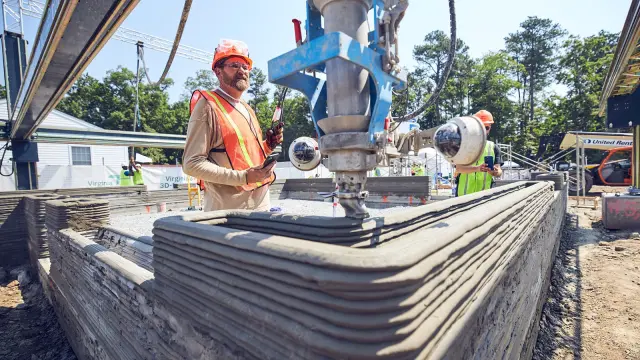
Introduction New Zealand’s housing market has long faced a crisis of affordability, availability, and sustainability. Traditional wooden homes, although charming and familiar, come with high costs, long build times, and environmental strain due to deforestation and waste. But the future may offer a revolutionary shift—and it’s not far off. AI-powered 3D printed homes are already making waves in the U.S., led by companies like ICON, and could soon transform the housing landscape in New Zealand.
This blog will explore how 3D printed houses work, the potential benefits they offer, and why Kiwis should be prepared for a major disruption in the real estate and construction industries. We’ll also discuss how these innovations could drastically reduce the cost of home ownership, making housing accessible for more New Zealanders.
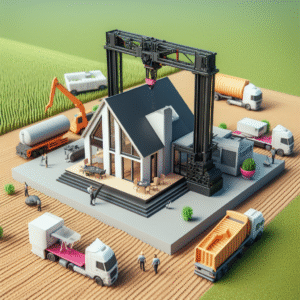
What Are 3D Printed Homes? 3D printed homes are built using large-scale printing machines that layer a specially formulated concrete or chemical-based material to construct walls and foundational elements. These machines operate with a high level of precision, guided by AI software that ensures structural integrity and efficiency.
Unlike traditional homes built from timber, nails, and insulation, 3D printed homes use a renewable, low-cost material mix that offers better strength, thermal insulation, and resistance to natural disasters. AI enhances this process by analyzing data in real time, optimizing the design and construction to reduce waste, time, and labor costs.
Why New Zealand Is Ready for 3D Printed Housing
Housing Shortage: With skyrocketing prices and limited availability, especially in cities like Auckland and Wellington, New Zealand desperately needs a new housing solution.
High Building Costs: Traditional timber-framed homes are costly due to the rising prices of materials and labor. Wood is not only expensive but also less durable than many modern alternatives.
Environmental Concerns: Sustainable construction is no longer a luxury—it’s a necessity. 3D printed homes produce significantly less construction waste and have a smaller carbon footprint.
AI + Construction: A Game-Changer AI isn’t just for software and automation—it’s revolutionizing construction. AI-driven 3D printers can:
Build a house in under 48 hours
Minimize errors through real-time data analysis
Ensure structural safety with predictive modeling
Customize designs quickly based on client needs
Companies like ICON have already built communities of 3D printed homes in the U.S. for a fraction of the cost and time of traditional construction. These homes are not prototypes—they are being lived in, mortgaged, and insured like any conventional home.
Cost Comparison: Traditional vs 3D Printed Homes
| Feature | Traditional Wood Home | AI 3D Printed Home |
|---|---|---|
| Average Build Time | 4 – 8 months | 24 – 72 hours |
| Material Cost | High (wood, nails, etc) | Low (composite concrete) |
| Labor Cost | High | Low |
| Durability | Moderate | High |
| Environmental Impact | High | Low |
| Estimated NZ Cost (Future) | $600,000+ | $100,000 – $200,000 |
Imagine owning a durable, sustainable home for under $200,000 in New Zealand. That future is closer than many think.
Risks of Buying Traditional Homes Today
Many Kiwis are currently purchasing homes at record-high prices. But what happens when AI 3D printed homes arrive and housing becomes more affordable? Property values could shift dramatically, leaving current homeowners with massive debt on depreciating assets.
A home bought for $1 million today might be worth half that or less if the cost to build a new, modern home drops to $200,000 in the near future. Buyers need to be cautious and forward-thinking when investing in real estate in 2025 and beyond.
Social Impact: Making Home Ownership a Reality for Everyone
One of the most exciting aspects of AI-printed housing is its potential to end homelessness and housing insecurity. With the ability to build affordable homes quickly, the government and private sector could collaborate to:
Provide low-cost housing for families in need
Develop rural communities without massive infrastructure investment
Empower young Kiwis to own homes earlier in life
When Will AI-Printed Homes Come to New Zealand?
While no official timeline has been announced, the global interest in AI housing technology is accelerating. Given New Zealand’s housing crisis, strong sustainability goals, and tech-savvy population, it’s likely that AI-printed homes could arrive within the next 3-5 years. Early adoption by developers or government-funded pilot projects could speed things up even further.
What Should You Do Now?
Stay Informed: Follow global trends in AI construction technology.
Delay Big Investments: If you’re considering buying a new home, weigh the risks of long-term mortgages on properties that may drop in value.
Join the Conversation: Get involved in Facebook housing groups, forums, or local government initiatives to support modern housing solutions.
Push for Change: Encourage policymakers to fund AI-based construction pilot projects and explore this as a solution to the housing crisis.
Conclusion
New Zealand stands on the edge of a housing revolution. AI-powered 3D printed homes are not science fiction—they are already here, changing lives around the world. As costs of traditional wooden homes continue to rise and sustainability becomes non-negotiable, now is the time to look to the future.
Whether you’re a homebuyer, developer, policymaker, or concerned citizen, understanding and embracing this shift could be the key to affordable, sustainable living in Aotearoa.